EGLIN AIR FORCE BASE, Fla. -- What I Didn’t Know Was Already There

My mental health story is deeply connected to my journey into motherhood. One in eight women who try to conceive face infertility, and I was one of them. I was diagnosed with Polycystic Ovary Syndrome and managed it for years with birth control pills. What I did not realize was that those same pills were also stabilizing Premenstrual Dysphoric Disorder.
When I stopped taking birth control to try to get pregnant, everything changed. I began experiencing intense, unpredictable mood swings that seemed to come out of nowhere. Because there was no clear pattern, I convinced myself it was just stress, something I could push through.
Before my first child was born, a coworker showed me the lactation rooms on base. At the end of the tour, she pulled me aside and talked about postpartum depression, giving me a doctor’s contact “just in case.” At the time, I did not think anything of it, but looking back now, that was wingmanship. Someone took the time to look out for me before I ever knew I needed it.
Everything Closes In

In March 2020, the pandemic began. I was three months pregnant with my second child when we were told we would telework “for two weeks.” For many, it was a relief. For me, it felt beyond suffocating.
I was spending my time during the shutdown at home with a toddler, and fear quietly took over my thoughts. Every night, my mind raced through endless “what if” scenarios. I was afraid to leave the house and overwhelmed by anxiety I could not explain.
I eventually convinced my squadron director that my mental health needed to be considered and that I wanted to return to in-person work. I needed structure and childcare. Returning to the office helped, but it did not fix what I was feeling internally.
One day, I sat at my desk and cried for hours. That was my breaking point.
I remembered the contact information for the doctor that my coworker had given to me before I had given birth to my first child and decided to finally give them a call. After several therapy sessions, I was diagnosed with untreated postpartum depression and anxiety, something I had unknowingly carried into my second pregnancy. I was prescribed a low-risk antidepressant, and for the first time, I felt like myself.
This moment reinforced something we do not always say out loud. Seeking help is not stepping away from the mission. It is how we stay in the fight.
After the Birth, Something Still Wasn’t Right
In
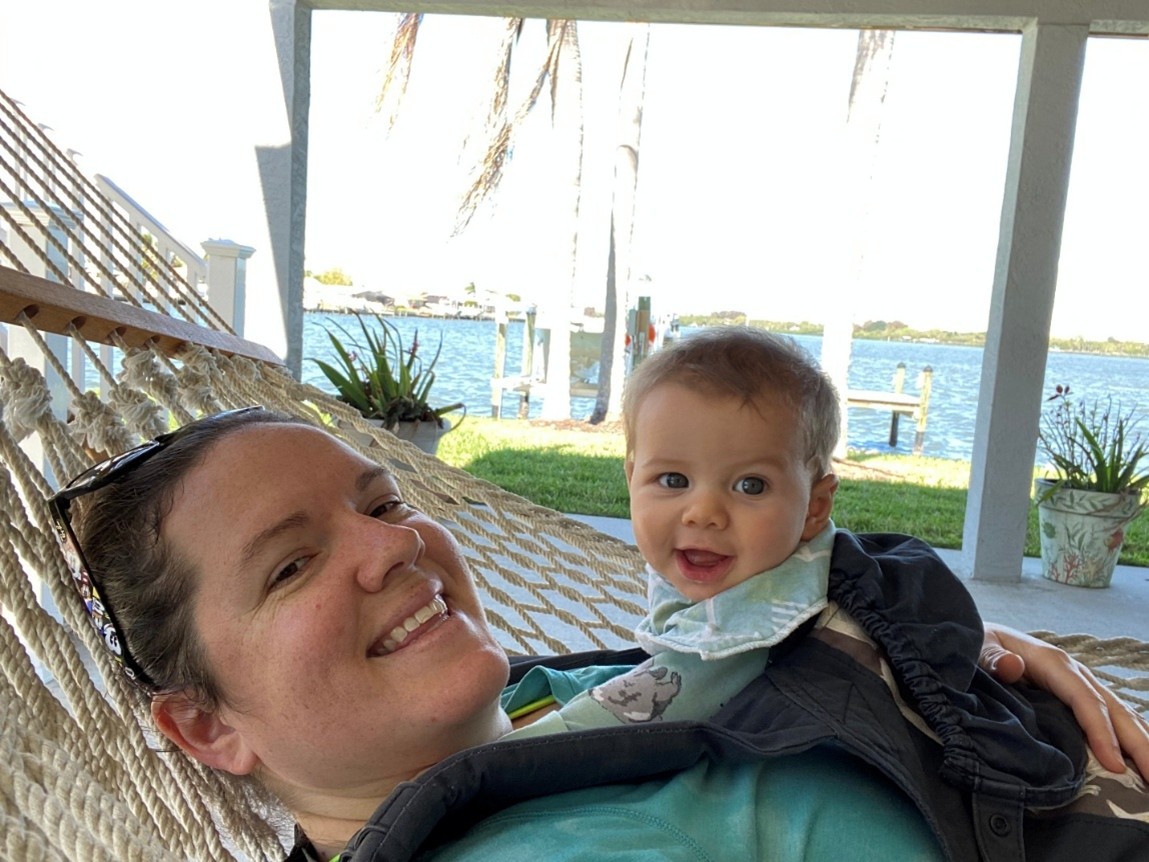
September 2020, I gave birth to our second child, a baby boy. It was a different experience from my first birth, as there were more restrictions and less support, but I felt more confident as a mother. Knowing this would be our last child, I chose a tubal ligation so I would not need birth control again.
Not long after, though, something began to change.
I went through phases where I could not stand to be around others. I felt repulsed by touch, which is incredibly difficult when you have a husband, toddler and a newborn. I would go on walks just to be alone.
Then came the intrusive thoughts, especially when driving alone to and from work.
“What would happen if I just drove off this bridge?” I never believed I would act on them, but they were there, and I kept them to myself.
There were days I called my mom, convinced everyone hated me, and that life would be easier if I just disappeared and was forever alone. But then a few days would pass, and those feelings would vanish, and everything would feel normal again.
From the outside, I was still showing up. Internally, though, I was losing control.
Looking back today, I realize that the disconnect I was dealing with is exactly what can risk lives if we fail to discuss it with others and truly recognize it.
When My Mind Started Making Decisions

By March 2021, I was teleworking part-time from my parents’ house while they helped with childcare. Internally, I was struggling more than ever.
It was during this time that I also began seriously considering divorce. I made plans to move closer to my parents and start over. At the time, it felt rational.
But tension quickly built between my parents and me. I became overwhelmed and irritable, snapping over small things. My mom suggested I spend a weekend alone in a hotel.
I thought it would help, so I did as she said and went to a hotel by myself. Instead, it revealed something deeper.
I did not miss being around others, but I also did not feel relief with being alone; I felt only emptiness.
When I returned, I told my dad I was leaving their house earlier than expected. Not to fix anything, but to get away.
He stopped me and said this was not the person he knew. Something was wrong.
That moment mattered. Someone else saw the change and said something. That is wingmanship in action.
Putting a Name to It and Getting Back in the Fight
Eventually, a wingman suggested my symptoms sounded like PMDD. The emotional highs and lows and the loss of control all fit.
Suddenly, everything made sense.
 Before giving birth, my irregular cycles from PCOS hid the pattern. Afterward, the timing became clear. My emotional crashes aligned with my cycle, and my anxiety would disappear when my period started.
I contacted my doctor immediately. My gynecologist confirmed PMDD was likely, and we discussed treatment. I chose to go back on birth control.
Within days, it felt like a fog had disappeared from around me. I could see clearly now.
I remember calling my mom and saying, “I finally feel like myself again.”
Today, I continue managing my PMDD. It is not perfect, but I actively work with my care team and maintain therapy as part of staying ready to ensure I can always support the mission.
As of 2024, my family has moved closer to support, and I have a care network that helps me stay grounded and capable.
Why This Story Matters

Mental health is not separate from readiness. It is the foundation of it.
PMDD and other mental health challenges can make you feel isolated and out of control. They can convince you that what you are experiencing is permanent. But they can be treated if we recognize them early and act.
Wingmanship is checking in, speaking up, and making sure no one is silently falling out of the fight. It is leaders creating space for support and teammates taking responsibility for one another, which is exactly the support I received from my team.
We cannot support the warfighter if we are not taking care of the people who make up the force.
There is help. There are answers. And with the right support, you will get back to being ready.
If you or someone you know is struggling with mental health and needs assistance, there are options.
Immediate Crisis (All Personnel): Dial 988 (Service Members and Veterans, press 1) to reach the Suicide & Crisis Lifeline, available 24/7. You can also text 838255.
Active-Duty Service Members: Contact your local Military Treatment Facility (MTF) or base Mental Health Clinic. You can also access confidential, non-medical counseling 24/7 through Military OneSource at 1-800-342-9647.
DoW Civilian Workforce: Reach out to your agency's Employee Assistance Program (EAP) for free, confidential counseling and support services.